Filter by

Flowers
Flowers are described and defined, their growth is explored, and their special features and uses are presented in an engaging and accessible way. Science curricula calling for the understanding of plant and flower parts and growth are matched.
- Edition
- -
- ISBN/ISSN
- 9781404236998
- Collation
- 24 pages : illustration ; 23 cm
- Series Title
- See How Plants Grow
- Call Number
- 582 EDW

A seed in need : a first look at the plant cycle
Aimed at young children, this work presents the story about the growth of a plant from seed to full flowering through the characters of an inquisitive ladybird and snail. A colorful parade of insects follow the progress of a sunflower seed in this first look at the life cycle of a sunflower.
- Edition
- -
- ISBN/ISSN
- 9780750024976
- Collation
- 31 pages : illustration ; 20 cm
- Series Title
- Little Bees
- Call Number
- 580 GOD

How do plants grow?
One of a series of titles covering the Key Stage 1 curriculum on plants. Topics covered include habitats, classification, growth and reproduction.
- Edition
- -
- ISBN/ISSN
- 9780431018096
- Collation
- 32 pages : illustration ; 21 cm
- Series Title
- World of plants
- Call Number
- 580 SPI

Why do plants have flowers?
What are flowers for ? Lots of plants grow bright, colorful flowers. Flowers make seeds. Seeds grow into new plants. Plants and animals have young that grow up to be like them. This is called reproduction. Cats have kittens, birds lay eggs, and most plants make seeds.
- Edition
- -
- ISBN/ISSN
- 9781403473639
- Collation
- 32 pages : illustration ; 22 cm
- Series Title
- World of plants
- Call Number
- 582 SPI

The tiny seed
In autumn, a strong wind blows flower seeds high in the air and carries them far across the land. One by one, many of the seeds are lost -- burned by the sun, fallen into the ocean, eaten by a bird. But some survive the long winter and, come spring, sprout into plants, facing new dangers -- trampled by playing children, picked as a gift for a friend. Soon only the tiniest seed remains, growing …
- Edition
- -
- ISBN/ISSN
- 014055713X
- Collation
- 32 pages : illustration ; 28 cm
- Series Title
- -
- Call Number
- C

Plants are living things
Most plants have roots, stems, and leaves. Whether they live in oceans, forests, or marshes, plants use these parts to make their own food. This easy-to-understand book introduces children to the basics of photosynthesis and food chains. It also looks at the different ways in which plants grow.
- Edition
- -
- ISBN/ISSN
- 9780778732334
- Collation
- 24 pages : illustration ; 24 cm
- Series Title
- -
- Call Number
- 570 KAL

Weslandia
Enter the witty, intriguing world of Weslandia! Now that school is over, Wesley needs a summer project. He’s learned that each civilization needs a staple food crop, so he decides to sow a garden and start his own - civilization, that is. He turns over a plot of earth, and plants begin to grow. They soon tower above him and bear a curious-looking fruit. As Wesley experiments, he finds that th…
- Edition
- -
- ISBN/ISSN
- 9780763610524
- Collation
- 40 pages : illustration ; 23 cm
- Series Title
- -
- Call Number
- F

Plants and animals live here
Think and discuss: Where do these animals live?
- Edition
- -
- ISBN/ISSN
- 9781740650298
- Collation
- 24 pages : illustration ; 15 cm
- Series Title
- National Geographic Windows on Literacy
- Call Number
- ECC15

Come to my party
Think and discuss: How do you invite people to a party?
- Edition
- -
- ISBN/ISSN
- 9781740650168
- Collation
- 8 pages : illustration ; 15 cm
- Series Title
- National Geographic Windows on Literacy
- Call Number
- ECC15
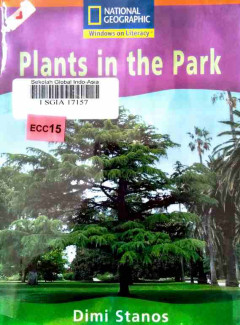
Plants in the park
Think and discuss: What is this plant?
- Edition
- -
- ISBN/ISSN
- 9781740655606
- Collation
- 8 pages : illustration ; 20 cm
- Series Title
- National Geographic Windows on Literacy
- Call Number
- ECC15
 Computer Science, Information & General Works
  Philosophy & Psychology
  Religion
  Social Sciences
  Language
  Pure Science
  Applied Sciences
  Art & Recreation
  Literature
  History & Geography