Filter by

Oxford Reading Tree inFact: Oxford Level 4: The Missing Bone
Visit the museum at night with Zac and Jess they've found a bone, and need to work out which animal's skeleton it belongs to! This enjoyable book introduces children to different animals' skeletons, while keeping them intrigued with the mystery of the missing bone! Oxford Reading Tree inFact is a compelling non-fiction series that aims to engage children in reading for pleasure as powerfully as…
- Edition
- -
- ISBN/ISSN
- 9780198371038
- Collation
- 16 Pages : Illustration ; 19 cm
- Series Title
- -
- Call Number
- -

Chemical reactions
Readers will learn what chemical reactions are, how they work, what changes happen during reactions, and how we can stop reactions.
- Edition
- -
- ISBN/ISSN
- 9781403493422
- Collation
- 32 pages : illustration ; 24 cm
- Series Title
- Building Blocks of Matter Heinemann InfoSearch
- Call Number
- 541 SPI

What is light? : exploring science with hands-on activities
Authors Richard and Louise Spilsbury use simple language to explain what light is. Readers explore reflections and bending light; how our eyes work; and how lenses, mirrors, and telescopes work. Throughout the book, interesting hands-on activities reinforce the text.
- Edition
- -
- ISBN/ISSN
- 9780766030978
- Collation
- 32 pages : illustration : 23 cm
- Series Title
- In touch with basic science
- Call Number
- 535 SPI

World cultures
'Investigate' encourages geographical enquiry with an interactive, investigative, and visual approach to a wide range of core curriculum topics. Each book uses a fun, interactive puzzle approach that gives children a chance to consider knowledge they already have and build on it.
- Edition
- -
- ISBN/ISSN
- 9781432934712
- Collation
- 32 pages : illustration : 19 cm
- Series Title
- Investigate
- Call Number
- 306 SPI
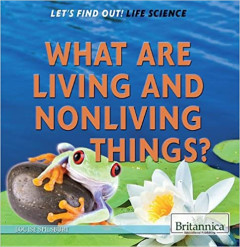
What are living and nonliving things?
Key biological terms are defined in a way that all readers can understand in this book that explains the essential concepts of life processes and how living and nonliving things relate to each other. The basics of feeding, respiration, waste, and reproduction, among other important activities that sustain living things, are explained in clear, simple language, with colorful photographs to illus…
- Edition
- -
- ISBN/ISSN
- 9781622752263
- Collation
- 32 pages : illustration : 21 cm
- Series Title
- Let's Find Out! Life Science
- Call Number
- 570 SPI
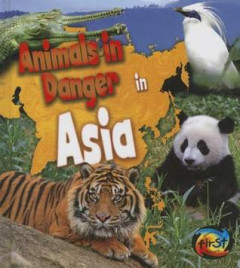
Animals in danger in Asia
This book introduces readers to a range of endangered animals found in Asia. Readers learn basic facts about each animal, and also why the animal's habitat is threatened. The book also considers what people can do to help, both at an international level and at the level of the readers themselves. Habitat maps, fact boxes, labels, and captions all combine to aid understanding.
- Edition
- -
- ISBN/ISSN
- 9781432976736
- Collation
- 32 pages : illustration ; 22 cm
- Series Title
- -
- Call Number
- 591.6 SPI

How do plants grow?
One of a series of titles covering the Key Stage 1 curriculum on plants. Topics covered include habitats, classification, growth and reproduction.
- Edition
- -
- ISBN/ISSN
- 9780431018096
- Collation
- 32 pages : illustration ; 21 cm
- Series Title
- World of plants
- Call Number
- 580 SPI

Why do plants have flowers?
What are flowers for ? Lots of plants grow bright, colorful flowers. Flowers make seeds. Seeds grow into new plants. Plants and animals have young that grow up to be like them. This is called reproduction. Cats have kittens, birds lay eggs, and most plants make seeds.
- Edition
- -
- ISBN/ISSN
- 9781403473639
- Collation
- 32 pages : illustration ; 22 cm
- Series Title
- World of plants
- Call Number
- 582 SPI
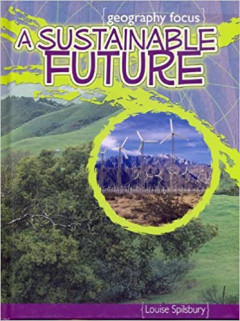
A sustainable future : saving and recycling resources
This new series introduces the most important key stage 2 Geographical themes such as saving and recycling resources, the effects of pollution, how we use the land and migration and settlement. It looks at how research is carried out which reinforces the pupil's own experience of geographical investigation; contains large photographs including aerial views, maps and graphs to illustrate statist…
- Edition
- -
- ISBN/ISSN
- 9781410911179
- Collation
- 48 pages : illustration ; 27 cm
- Series Title
- Geography Focus
- Call Number
- 363.7 SPI
 Computer Science, Information & General Works
  Philosophy & Psychology
  Religion
  Social Sciences
  Language
  Pure Science
  Applied Sciences
  Art & Recreation
  Literature
  History & Geography