Filter by
Underwater exploration
- Edition
- -
- ISBN/ISSN
- 9780531166840
- Collation
- 78 pages : illustration ; 21 cm
- Series Title
- The reastless sea
- Call Number
- 551.46 VOG
- Edition
- -
- ISBN/ISSN
- 9780531166840
- Collation
- 78 pages : illustration ; 21 cm
- Series Title
- The reastless sea
- Call Number
- 551.46 VOG
Freezing and melting
Summarizes how water changes from a solid to a liquid and back again, and introduces related facts such as that water freezes at thirty-two degrees Fahrenheit and that ice floats.
- Edition
- -
- ISBN/ISSN
- 9780822545903
- Collation
- 23 pages : illustration ; 18 cm
- Series Title
- -
- Call Number
- 536 NEL
Temperature
Introduces temperature, along with melting, freezing, and how to measure temperature. Includes an activity, and information on Anders Celsius.
- Edition
- -
- ISBN/ISSN
- 9780736851596
- Collation
- 24 pages : illustration ; 20 cm
- Series Title
- Our Physical World
- Call Number
- 536 OLI

Space
An introduction to outer space discusses the galaxy, the solar system, the moon, space travel, satellites and space probes, and the possibilities of life on other planets.
- Edition
- -
- ISBN/ISSN
- 9780721411064
- Collation
- 43 pages : illustration ; 17 cm
- Series Title
- Ladybird learners
- Call Number
- 523 DAL

A look at moons
Describes the physical characteristics of the moons in our solar system and the processes and space craft used to gather information about them.
- Edition
- -
- ISBN/ISSN
- 9780531165140
- Collation
- 112 pages : illustration ; 22 cm
- Series Title
- Out of this world
- Call Number
- 523.4 WAT
The moon
For centuries, humankind has gazed up at the Moon in awe and wonder. It has been a source of inspiration to artists, astronomers, poets, and mathematicians alike. But how much do we really know about our closest neighbor? Explore the history of man’s relationship with the Moon—the science, the myths, the facts, and the fiction—and how it affects our everyday lives and the world around us.
- Edition
- -
- ISBN/ISSN
- 9781848577381
- Collation
- 175 pages : illustration ; 26 cm
- Series Title
- -
- Call Number
- 523.3083 PAN


Ward Lock's counting book
- Edition
- -
- ISBN/ISSN
- 0706359690
- Collation
- 32 pages : illustration : 20 cm
- Series Title
- -
- Call Number
- 513.2 LOC
- Edition
- -
- ISBN/ISSN
- 0706359690
- Collation
- 32 pages : illustration : 20 cm
- Series Title
- -
- Call Number
- 513.2 LOC
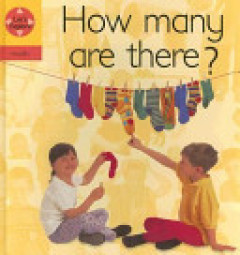
How many are there?
It's a fact--kids love to explore. The Let's Explore series introduces important concepts in mathematics and earth science for young children in a friendly and attractive way. Bright, clear photographs stimulate discussion, while the simple, easy-to-read text is presented in an approachable "question, investigation, and answer" format.
- Edition
- -
- ISBN/ISSN
- 9780749635725
- Collation
- 32 pages : illustration : 22 cm
- Series Title
- Let's explore
- Call Number
- 513.2 PLU

One woolly wombat
Humorous illustrations depict fourteen Australian animals, introduced in rhyme, along with the numbers from one to fourteen
- Edition
- -
- ISBN/ISSN
- 9780916291105
- Collation
- 32 pages : illustration : 27 cm
- Series Title
- -
- Call Number
- 513.2 TRI
 Computer Science, Information & General Works
 Philosophy & Psychology
 Religion
 Social Sciences
 Language
 Pure Science
 Applied Sciences
 Art & Recreation
 Literature
 History & Geography