Filter by

Chemical reactions
Readers will learn what chemical reactions are, how they work, what changes happen during reactions, and how we can stop reactions.
- Edition
- -
- ISBN/ISSN
- 9781403493422
- Collation
- 32 pages : illustration ; 24 cm
- Series Title
- Building Blocks of Matter Heinemann InfoSearch
- Call Number
- 541 SPI

What is light? : exploring science with hands-on activities
Authors Richard and Louise Spilsbury use simple language to explain what light is. Readers explore reflections and bending light; how our eyes work; and how lenses, mirrors, and telescopes work. Throughout the book, interesting hands-on activities reinforce the text.
- Edition
- -
- ISBN/ISSN
- 9780766030978
- Collation
- 32 pages : illustration : 23 cm
- Series Title
- In touch with basic science
- Call Number
- 535 SPI
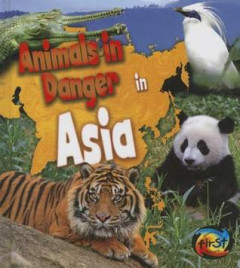
Animals in danger in Asia
This book introduces readers to a range of endangered animals found in Asia. Readers learn basic facts about each animal, and also why the animal's habitat is threatened. The book also considers what people can do to help, both at an international level and at the level of the readers themselves. Habitat maps, fact boxes, labels, and captions all combine to aid understanding.
- Edition
- -
- ISBN/ISSN
- 9781432976736
- Collation
- 32 pages : illustration ; 22 cm
- Series Title
- -
- Call Number
- 591.6 SPI

How do plants grow?
One of a series of titles covering the Key Stage 1 curriculum on plants. Topics covered include habitats, classification, growth and reproduction.
- Edition
- -
- ISBN/ISSN
- 9780431018096
- Collation
- 32 pages : illustration ; 21 cm
- Series Title
- World of plants
- Call Number
- 580 SPI

Why do plants have flowers?
What are flowers for ? Lots of plants grow bright, colorful flowers. Flowers make seeds. Seeds grow into new plants. Plants and animals have young that grow up to be like them. This is called reproduction. Cats have kittens, birds lay eggs, and most plants make seeds.
- Edition
- -
- ISBN/ISSN
- 9781403473639
- Collation
- 32 pages : illustration ; 22 cm
- Series Title
- World of plants
- Call Number
- 582 SPI

Habitats
Following on from the hugely successful "Start-Up Science", "Step-Up Science" has been created specifically to support the schemes of work in the Science Curriculum at KS2 - the next step up! Highly illustrated with colour photographs and diagrams, this series is designed to encourage investigative skills and covers a wide range of living things, materials and phenomena.
- Edition
- -
- ISBN/ISSN
- 0237532085
- Collation
- 32 pages : illustration ; 25 cm
- Series Title
- Step - Up Science
- Call Number
- 577 SPI
 Computer Science, Information & General Works
  Philosophy & Psychology
  Religion
  Social Sciences
  Language
  Pure Science
  Applied Sciences
  Art & Recreation
  Literature
  History & Geography