Filter by
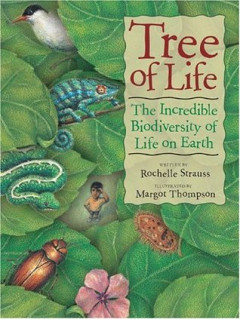
Tree of life : the incredible biodiversity of life on earth
If every known species on Earth were a leaf on a tree, that tree would have 1 750 000 leaves. Since humans count for just one leaf on the tree, we have a lot to learn about the millions of other forms of life with which we share the world. A dazzlingly illustrated and child-friendly introduction to biodiversity, Tree of Life shows how living things are classified into five kingdoms --- and how …
- Edition
- -
- ISBN/ISSN
- 9781554539611
- Collation
- 40 pages : illustration ; 30 cm
- Series Title
- -
- Call Number
- 578 STR
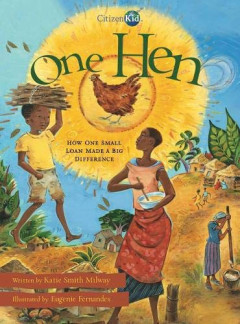
One hen : how one small loan made a big difference
Inspired by true events, One Hen tells the story of Kojo, a boy from Ghana who turns a small loan into a thriving farm and a livelihood for many. After his father died, Kojo had to quit school to help his mother collect firewood to sell at the market. When his mother receives a loan from some village families, she gives a little money to her son. With this tiny loan, Kojo buys a hen. A year lat…
- Edition
- -
- ISBN/ISSN
- 9781554530281
- Collation
- 32 pages : illustration ; 30 cm
- Series Title
- -
- Call Number
- M
Village homes
- Edition
- -
- ISBN/ISSN
- 9780750268059
- Collation
- 30 pages : illustration ; 27 cm
- Series Title
- Homes around the world
- Call Number
- 306 BAR
- Edition
- -
- ISBN/ISSN
- 9780750268059
- Collation
- 30 pages : illustration ; 27 cm
- Series Title
- Homes around the world
- Call Number
- 306 BAR

The four o'clock faculty : a rogue guide to revolutionize professional develo…
Author Rich Czyz is on a mission to revolutionize professional learning for all educators. In The Four O’Clock Faculty, Rich identifies ways to make PD meaningful, efficient, and, above all, personally relevant. This book is a practical guide that reveals why some PD is so awful and what you can do to change the model for the betterment of you and your colleagues.
- Edition
- -
- ISBN/ISSN
- 9781946444363
- Collation
- 119 pages : illustration ; 22 cm
- Series Title
- -
- Call Number
- 371.200973 CZY
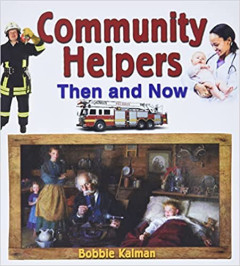
Community helpers then and now
"Once upon a time, doctors made house calls, fire trucks were pulled by horses, and the milkman delivered fresh milk right to peoples doors. In this innovative title, students will love learning about their favorite community helpers and how their jobs have evolved over time."--
- Edition
- -
- ISBN/ISSN
- 9780778701439
- Collation
- 24 pages : illustration ; 24 cm
- Series Title
- -
- Call Number
- 307 KAL

Counting on community
Counting on Community is Innosanto Nagara's follow-up to his hit ABC book, A is for Activist. Counting up from one stuffed piñata to ten hefty hens--and always counting on each other--children are encouraged to recognize the value of their community, the joys inherent in healthy eco-friendly activities, and the agency they posses to make change. A broad and inspiring vision of diversity is tol…
- Edition
- -
- ISBN/ISSN
- 9781609806323
- Collation
- 24 pages : illustration ; 14 cm
- Series Title
- -
- Call Number
- 302.14 NAG
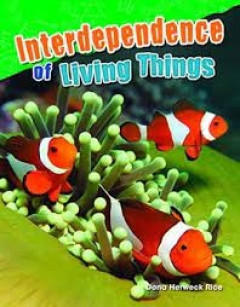
Interpendence of living things
Interdependence of Living Things is an informational text that explains interdependence, food webs, ecosystems, and independence. A two-page activity invites students to explore how the parts of an ecosystem are related. The book is divided into sections with some subsections. Sentences vary in length and complexity. Illustrations, labeled photographs, and diagrams support the text. Punctuat…
- Edition
- -
- ISBN/ISSN
- 9781480745995
- Collation
- 32 pages : illustration ; 22 cm
- Series Title
- -
- Call Number
- 570 RIC

Plants and animals live here
Think and discuss: Where do these animals live?
- Edition
- -
- ISBN/ISSN
- 9781740650298
- Collation
- 24 pages : illustration ; 15 cm
- Series Title
- National Geographic Windows on Literacy
- Call Number
- ECC15
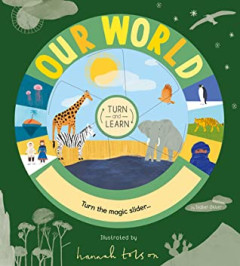
Our world
Discover the amazing adaptations that animals have made to survive in some of the harshest places on Earth. Readers can also uncover weird and wonderful plants and find out about the traditions of people from all over our world.
- Edition
- -
- ISBN/ISSN
- 9781848578425
- Collation
- 10 pages : illustration ; 28 cm
- Series Title
- -
- Call Number
- 577 OTT
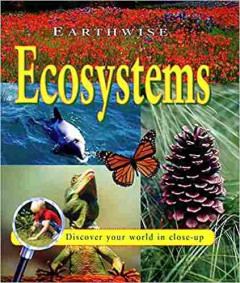
Ecosystems
Supporting the National Curriculum, each book in this series encourages readers aged between seven and ten to observe and record their environment. This title looks at the living things around us, how they work with each other and the world around them.
- Edition
- -
- ISBN/ISSN
- 9780749681401
- Collation
- 32 pages : illustration ; 26 cm
- Series Title
- Earthwise
- Call Number
- 577 PIP
 Computer Science, Information & General Works
  Philosophy & Psychology
  Religion
  Social Sciences
  Language
  Pure Science
  Applied Sciences
  Art & Recreation
  Literature
  History & Geography