Filter by

Let's read about.... Rosa Parks
Rosa Parks believed in herself and worked hard to succeed from the time she was a girl. Read about Rosa, a young woman who helped change history when she fought for black people's equal rights.
- Edition
- -
- ISBN/ISSN
- 0439564131
- Collation
- 32 pages : illustration ; 22 cm
- Series Title
- -
- Call Number
- 920 PAR
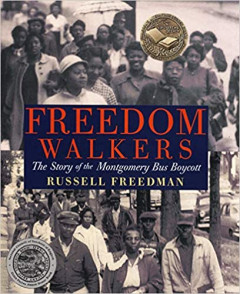
Freedom walkers : the story of the Montgomery bus boycott
A riveting account of the civil rights boycott that changed history by the foremost author of history for young people. Now a classic, Freedman’s book tells the dramatic stories of the heroes who stood up against segregation and Jim Crow laws in 1950s Alabama. A master of succinct historical narratives, Freeman explains the contributions of and sacrifices made by Rosa Parks and Claudette …
- Edition
- -
- ISBN/ISSN
- 9780545034449
- Collation
- 114 pages : illustration ; 23 cm
- Series Title
- -
- Call Number
- 920 FRE
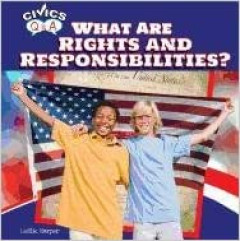
What are rights and responsibilities?
Readers will learn about a citizen's rights and responsibilities through engaging, accessible text. After reading, they will be able define the difference between a right and a responsibility, gives examples of rights people have stood up and fought for, and of responsibilities that are part of good citizenship. Readers will gain a new understanding of the importance of the relationship between…
- Edition
- -
- ISBN/ISSN
- 9781448874378
- Collation
- 24 pages : illustration ; 21 cm
- Series Title
- Civics Q&A
- Call Number
- 323.097 HAR

..If you lived at the time of Martin Luther King
If you lived at the time of Martin Luther King --When did the civil rights movement begin? --Were children involved in civil rights protests? --What was the March on Washington? This book tells you what it was like during the exciting era when Martin Luther King led the fight against segregation.
- Edition
- -
- ISBN/ISSN
- 9780590425827
- Collation
- 80 pages : illustration ; 18 cm
- Series Title
- -
- Call Number
- 323 LEV

Dare to dream : Coretta Scott King and the civil rights movement
From her childhood encounters with discrimination to her activism as an adult, Coretta Scott King dreamed of finding a place where people were treated equally. This compelling biography tells how she joined her husband, the Rev. Martin Luther King, Jr. to lead protest marches and stand up to prejudice and violence.
- Edition
- -
- ISBN/ISSN
- 9780439168410
- Collation
- 60 pages : illustration ; 19 cm
- Series Title
- -
- Call Number
- 923 KIN

Take a stand, Rosa Parks
Take a Stand, Rosa Parks! by Peter and Connie Roop. It is one in a series of chapter book biographies the Roops have done for Scholastic. Rosa Parks is best known for her refusal to give up her seat on James Blake's bus. Take a Stand explains the circumstances of Rosa's life that lead her to take on James Blake.
- Edition
- -
- ISBN/ISSN
- 0439676258
- Collation
- 59 pages : illustration ; 19 cm
- Series Title
- A Scholastic Chapter Book Biography
- Call Number
- 923 PAR

Civil Rights Marches
Describes the marches in the United States on behalf of civil rights for Blacks from the 1950s to the 1990s, including the March on Washington and other important marches.
- Edition
- -
- ISBN/ISSN
- 0516265164
- Collation
- 30 pages : illustration ; 24 cm
- Series Title
- Cornerstones of freedom
- Call Number
- 973 GEO

I have a dream : the story of Martin Luther King
When Martin Luther King grew up in the South, black people were treated very badly. They had to go to separate schools. They could only ride in the back of the bus. In many places, they were not allowed to vote. Even as a young boy, Martin knew this was wrong. And when he grew up, he did something about it. He made speeches. He led marches. He made everyone think about what was fair.
- Edition
- -
- ISBN/ISSN
- 0590442309
- Collation
- 127 pages : illustration ; 19 cm
- Series Title
- Scholastic Biography
- Call Number
- 923 KIN
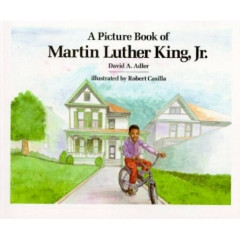
A picture book of Martin Luther King, Jr
Born in 1929, Martin Luther King, Jr. grew up to become a civil rights leader whose philosophy and practice of nonviolent civil disobedience helped African Americans win many battles for equal rights. Young readers will learn how his interest in equality was sparked by experiences in his childhood, and how his legacy shaped modern America. Pairing detailed illustrations and an accessible na…
- Edition
- -
- ISBN/ISSN
- 0590436112
- Collation
- 32 pages : illustration : 20 cm
- Series Title
- -
- Call Number
- 923 KIN
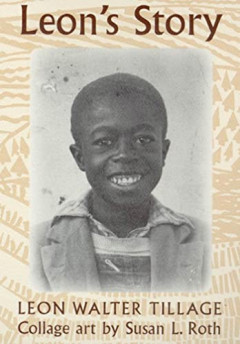
Leon's story
I remember that as a young boy I used to look in the mirror and I would curse my color, my blackness. But in those days they didn't call you "black." They didnt say "minority." They called us "colored" or "nigger." Leon Tillage grew up the son of a sharecropper in a small town in North Carolina. Told in vignettes, this is his story about walking four miles to the school for black children, a…
- Edition
- -
- ISBN/ISSN
- 0439283191
- Collation
- 107 pages : illustration ; 19 cm
- Series Title
- -
- Call Number
- 920 TIL
 Computer Science, Information & General Works
  Philosophy & Psychology
  Religion
  Social Sciences
  Language
  Pure Science
  Applied Sciences
  Art & Recreation
  Literature
  History & Geography