Filter by

..If you grew up with George Washington
A portrait of daily life in Colonial America includes discussions of houses, schools, food, clothes, and money.
- Edition
- -
- ISBN/ISSN
- 9780590451550
- Collation
- 64 pages : illustration ; 18 cm
- Series Title
- -
- Call Number
- 973.4 GRO
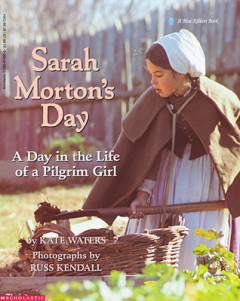
Sarah Morton's day : a day in the life of a Pilgrim girl
Text and photographs of Plimoth Plantation follow a pilgrim girl through a typical day as she milks the goats, cooks and serves meals, learns her letters, and adjusts to her new stepfather.
- Edition
- -
- ISBN/ISSN
- 0590474006
- Collation
- 32 pages : illustration : 25 cm
- Series Title
- -
- Call Number
- 974.4 WAT
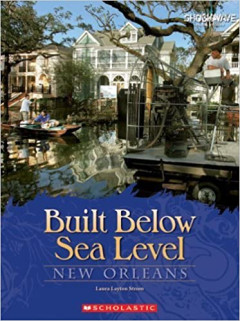
Built below sea level : New Orleans
- Edition
- -
- ISBN/ISSN
- 9780531187746
- Collation
- 32 pages : illustration : 23 cm
- Series Title
- -
- Call Number
- 976.3 STR
- Edition
- -
- ISBN/ISSN
- 9780531187746
- Collation
- 32 pages : illustration : 23 cm
- Series Title
- -
- Call Number
- 976.3 STR
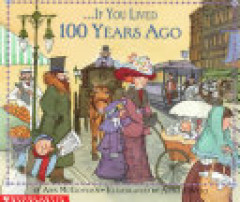
..If you lived 100 years ago
What a difference 100 years has made! Back at the turn of the century there were no televisions, airplanes, computers, plastics, movies with sound, or space travel; there were only about 8,000 automobiles in the whole country. Just turning on a light switch was a new experience. In 58 tantalizing questions and answers, author Ann McGovern gives readers a fascinating look at life in New York Ci…
- Edition
- -
- ISBN/ISSN
- 0590960016
- Collation
- 80 pages : illustration ; 18 cm
- Series Title
- -
- Call Number
- 973.9 MCG
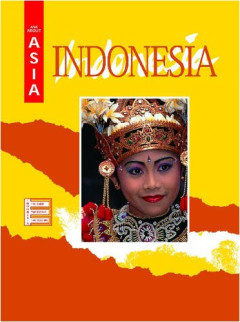
Indonesia
What do steaming volcanoes, Komodo dragons, three-wheeled taxis, bamboo musical instruments, and giant moths bigger than your hand have in common? They are all part of life in Indonesia; just some of the things you will see as you travel between the 17,508 islands of this amazingly varied archipelago. This title discusses about Indonesia.
- Edition
- -
- ISBN/ISSN
- 1590842022
- Collation
- 47 pages : illustration ; 28 cm
- Series Title
- Ask About Asia
- Call Number
- 959.8 SIM
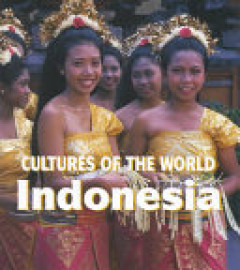
Indonesia
Diversity is the spice of life, and the highly regarded Cultures of the World series celebrates just that in fully updated, and expanded editions. As has always been true of these outstanding titles, an abundance of vibrant photographs -- including those new to this edition -- stimulate the imaginations of young readers as they travel the globe. A new chapter on the environment focuses on polit…
- Edition
- -
- ISBN/ISSN
- 0761413553
- Collation
- 144 pages : illustration ; 24 cm
- Series Title
- Cultures of the World
- Call Number
- 959.8 MIR
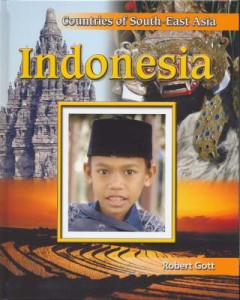
Indonesia
Looking at South-east Asia, this series covers the history, government, climate, industry, population, natural disasters, conflicts, landmarks, food, plants and animals, recreation, education, work, culture, the environment and tourism of the title country. Ages 7-12.
- Edition
- -
- ISBN/ISSN
- 9781740703376
- Collation
- 32 pages : illustration : 26 cm
- Series Title
- Countries of South-East Asia
- Call Number
- 959.8 GOT
Indonesia
Each illustrated volume in this series explores the lives of children from all around the world. The combination of letters and non-fiction text make these ideal books to support both the geography and literacy work at Key Stage 1 and for less able pupils at Key Stage 2.
- Edition
- -
- ISBN/ISSN
- 184234241X
- Collation
- 32 pages : illustration : 27 cm
- Series Title
- -
- Call Number
- 959.8 CUM
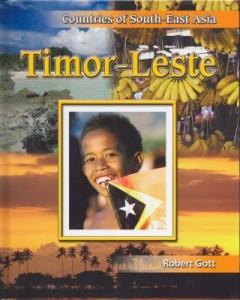
Timor-Leste
Looking at South-east Asia, this series covers the history, government, climate, industry, population, natural disasters, conflicts, landmarks, food, plants and animals, recreation, education, work, culture, the environment and tourism of the title country. Ages 7-12.
- Edition
- -
- ISBN/ISSN
- 9781740703413
- Collation
- 32 pages : illustration : 27 cm
- Series Title
- Countries of South-East Asia
- Call Number
- 959.87 GOT
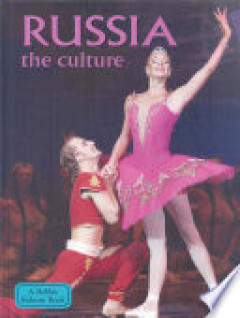
Russia. The culture
Suitable for people of ages 7 to 14 years, this book presents Russia's history. It includes such topics as: the architecture of a state (post-Communist office buildings and opulent homes of the rich); Russia's circus tradition; and, communications changes - television and film and rock music.
- Edition
- -
- ISBN/ISSN
- 9780778796725
- Collation
- 32 pages : illustration : 27 cm
- Series Title
- -
- Call Number
- 947 NIC
 Computer Science, Information & General Works
  Philosophy & Psychology
  Religion
  Social Sciences
  Language
  Pure Science
  Applied Sciences
  Art & Recreation
  Literature
  History & Geography