Filter by

Frogs
How far can frogs jump? Why do their eggs look slimy? Answer these questions and many more in this illustrated introduction to amphibians, and learn about the unique role frogs play in the environment. With her signature bright, well-labeled diagrams and simple text, Gail Gibbons introduces the habitat and life cycles of frogs, and gives a brief overview of common frog behaviors. Important v…
- Edition
- -
- ISBN/ISSN
- 0590506625
- Collation
- 32 pages : illustration ; 20 cm
- Series Title
- -
- Call Number
- 597.8 GIB
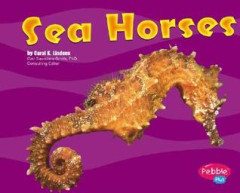
Sea horses
Text and photographs introduce sea horses, their physical characteristics including their length, their head that looks like a horse, the bony plates that cover their body, their fins, and their curly tails.
- Edition
- -
- ISBN/ISSN
- 9780736851183
- Collation
- 24 pages : illustration ; 22 cm
- Series Title
- -
- Call Number
- 597 LIN
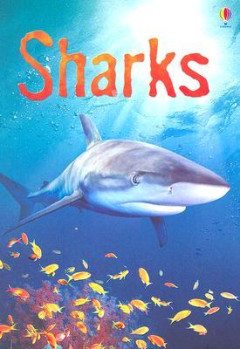
Sharks
What do sharks like to eat? Which shark glows in the dark? And why do some sharks never stop swimming? Youll find out the answers and lots more fun facts in this shark-infested book.
- Edition
- -
- ISBN/ISSN
- 9780545033077
- Collation
- 32 pages : illustration ; 20 cm
- Series Title
- -
- Call Number
- 597.3 CLA
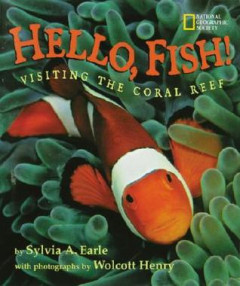
Hello, fish!
Sylvia Earl becomes an underwater guide as she shows and talks about some of her favourite fish. Enchanting Gobi's pop out of the ocean, jewel-like dam selfish glimmer in the sea, a silver reef shark smiles enigmatically. Each spread offers a poetic yet factual text about a different fish with a large, brilliantly coloured photograph of that fish. An enchanting introduction to life around a cor…
- Edition
- -
- ISBN/ISSN
- 9781413118193
- Collation
- 30 pages : illustration ; 28 cm
- Series Title
- Visiting the coral reef
- Call Number
- 597 EAR

The big book of the blue
Following the wild success of The Big Book of Bugs and The Big Book of Beasts, The Big Book of the Blue is the third installment in Yuval Zommer’s beloved series. Alongside everything the young oceanographer needs to know, Zommer’s charming illustrations bring to life some of the slipperiest, scaliest, strangest, and most monstrous underwater animals. The book opens by explaining how diffe…
- Edition
- -
- ISBN/ISSN
- 9780500651193
- Collation
- 61 pages : illustration ; 32 cm
- Series Title
- -
- Call Number
- 591.77 ZOM
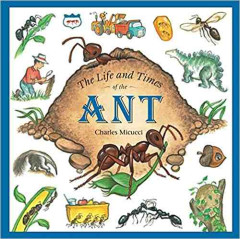
The life and times of the ant
Not mighty in size, but mighty in resourcefulness and industry, the ant has crawled the earth since prehistoric times. It has dwelt in rainforest tree trunks and acorns of oak trees, beneath logs, and under sidewalks. It has protected forests by capturing insects, cleared weeds away from acacia trees, and by growing gardens has released important nutrients into the soil. Seed lifters, dirt digg…
- Edition
- -
- ISBN/ISSN
- 9780439657198
- Collation
- 32 pages : illustration ; 22 cm
- Series Title
- -
- Call Number
- 595.7 MIC

Endangered baby animals
Baby animals are endangered for many of the same reasons as adult animals, but not always. Sometimes not enough babies are born to replace the adult animals that die. Some babies get eaten by predators when the mother is away hunting. Other causes include global warming, loss of habitat, and poaching. Amazing pictures of baby animals will make children feel more motivated to learn about endange…
- Edition
- -
- ISBN/ISSN
- 9780778740766
- Collation
- 24 pages : illustration ; 24 cm
- Series Title
- -
- Call Number
- 591.6 KAL

Seashore
Not only are seashores a popular muse for painters, the stretching seashore is also home to millions of creatures, from crabs and sea lions to sea urchins and puffins. Stunning real-life photographs of lobsters, tide pools, fish, seals, seabirds, and more offer a unique "eyewitness" view of life on the seashore. See a starfish on the move, how a sea urchin disguises itself, a sea anemone catch …
- Edition
- -
- ISBN/ISSN
- 9780329603168
- Collation
- 72 pages : illustration ; 28 cm
- Series Title
- DK Eyewitness Books
- Call Number
- 591.7 PAR

Endangered and extinct reptiles
Short-nosed sea snakes and blue iguanas are two examples of endangered reptiles. Few of them exist in the wild. Other reptiles have already gone extinct. What hurts these animals? What can you do to help? Listen to this audiobook to find out!
- Edition
- -
- ISBN/ISSN
- 9781467713344
- Collation
- 32 pages : illustration ; 26 cm
- Series Title
- Lightning Bolt Books
- Call Number
- 591.6 BOO
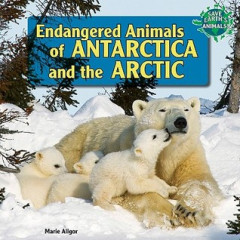
Endangered animals of Antarctica and the Arctic
The animals of Antarctica and the Arctic live in some of Earth's most challenging climates. Many of these animals face extinction at the hands of poachers, habitat loss, and climate change. This book profiles the animals of these regions and describes the climates and habitats in which these animals live. This colorful and engaging book explains the laws and programs in place to protect these u…
- Edition
- -
- ISBN/ISSN
- 9781448825349
- Collation
- 24 pages : illustration ; 23 cm
- Series Title
- Save Earth's Animals!
- Call Number
- 591.6 ALL
 Computer Science, Information & General Works
  Philosophy & Psychology
  Religion
  Social Sciences
  Language
  Pure Science
  Applied Sciences
  Art & Recreation
  Literature
  History & Geography