Filter by

Living leaf : the story of how plants grow and survive
This non-fiction storybook for children aged 5+ introduces the natural world and explains concepts such as adaptation and fertilization through a lyrical narrative. It looks at an amazing array of plants from all around the world and at how the shape and structure of their leaves help them to thrive in difficult environments.
- Edition
- -
- ISBN/ISSN
- 9780750287654
- Collation
- 32 pages : illustration ; 23 cm
- Series Title
- Plant life
- Call Number
- 582 HEN

Cereals
This is an introduction to the world of cereals. The text shows why cereals are an important group of plants, why they don't have colourful flowers, and how farmers collect the grain from cereal plants.
- Edition
- -
- ISBN/ISSN
- 9781404237025
- Collation
- 24 pages : illustration ; 23 cm
- Series Title
- See How Plants Grow
- Call Number
- 623.1 EDW
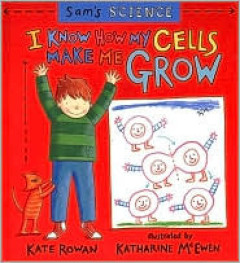
I know how my cells make me grow
Sam and his mother talk about the different kinds of cells in his body, how they grow, and how in doing so they help him grow.
- Edition
- -
- ISBN/ISSN
- 9780744572346
- Collation
- 29 pages : illustration ; 24 cm
- Series Title
- Sams Science
- Call Number
- R

My science book of growth
Can you inflate a balloon using yeast and sugar? Do you know what happens if you plant a bean upside down? Finding out about science becomes fun with this exciting new series of practical activity books.
- Edition
- -
- ISBN/ISSN
- 0863185878
- Collation
- 29 pages : illustration ; 24 cm
- Series Title
- -
- Call Number
- 571 ARD
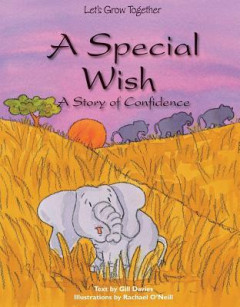
A special wish : a story of confidence
Tiny is a little elephant with a big problemhe doesnt like that he is so much smaller and than all the other elephants. Luckily, Tiny has wonderful friends, family, and jungle neighbors who all help build his confidence by reminding him that theres nothing wrong with being small and that one day he will grow up as big and strong as any elephant.
- Edition
- -
- ISBN/ISSN
- 9781607547600
- Collation
- 32 pages : illustration ; 28 cm
- Series Title
- Let's Grow Together
- Call Number
- F68

I'm big enough
A wonderful story about realizing when it's time to grow up! In this heartwarming story, Bean the bunny rabbit learns the importance of growing up. Bean has been carrying around her blanket her entire life but when her family gently suggests she might be big enough to stop taking it everywhere, Bean gets scared. She hides her blanket inside a tree stump to protect it, but when she goes back,…
- Edition
- -
- ISBN/ISSN
- 9780439906661
- Collation
- 28 pages : illustration ; 25 cm
- Series Title
- -
- Call Number
- St

Our bodies
Questions and answers present information about such aspects of our body as senses, emotions, growing, fitness, dental care, babies, and sexuality.
- Edition
- -
- ISBN/ISSN
- 0809471523
- Collation
- 87 pages : illustration ; 30 cm
- Series Title
- A child's library of learning
- Call Number
- 612 OUR
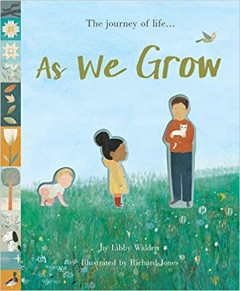
As we grow
In this stunning picture book, lyrical text and enchanting illustrations beautifully depict each stage of life and the journey of transformation that we experience as we grow up.
- Edition
- -
- ISBN/ISSN
- 9781848578555
- Collation
- 32 pages : illustration ; 27 cm
- Series Title
- The Journey Of Life.....
- Call Number
- W

How corn grows
The life cycle of plants is a common theme in the early science curriculum. This delightful series uses simple text to explain how tiny seeds turn into giant trees or into the vegetables children find on their dinner plates. Full-color photographs and illustrations help young readers understand each stage of the plant's life cycle.
- Edition
- -
- ISBN/ISSN
- 9780836863307
- Collation
- 24 pages : illustration ; 18 cm
- Series Title
- How Plants Grow
- Call Number
- 584 MAT

How pine trees grow
The life cycle of plants is a common theme in the early science curriculum. This delightful series uses simple text to explain how tiny seeds turn into giant trees or into the vegetables children find on their dinner plates. Full-color photographs and illustrations help young readers understand each stage of the plant's life cycle.
- Edition
- -
- ISBN/ISSN
- 9780836863338
- Collation
- 24 pages : illustration ; 18 cm
- Series Title
- How Plants Grow
- Call Number
- 585 MAT
 Computer Science, Information & General Works
  Philosophy & Psychology
  Religion
  Social Sciences
  Language
  Pure Science
  Applied Sciences
  Art & Recreation
  Literature
  History & Geography