Filter by
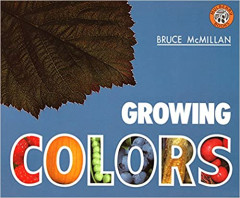
Growing colors
Join award-winning photographer Bruce McMillan as he takes his camera in search of some of nature's gorgeous colors found in gardens and orchards—and expect the unexpected! With vibrancy, clarity, and brilliance, these photos will help young readers learn about their fruits and veggies, and also help them explore all the colors of the rainbow through everyday foods. “A vibrant introdu…
- Edition
- -
- ISBN/ISSN
- 0688078451
- Collation
- 32 pages : illustration : 23 cm
- Series Title
- -
- Call Number
- 535.6 MCC

We are the Earth
- Edition
- -
- ISBN/ISSN
- 9780778746348
- Collation
- 32 pages : illustration : 27 cm
- Series Title
- -
- Call Number
- 508 KAL
- Edition
- -
- ISBN/ISSN
- 9780778746348
- Collation
- 32 pages : illustration : 27 cm
- Series Title
- -
- Call Number
- 508 KAL
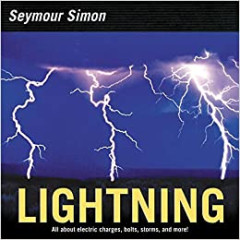
Lightning
Join award-winning science writer Seymour Simon in this picture book introduction to lightning. This nonfiction picture book is an excellent choice to share during homeschooling, in particular for children ages 6 to 8. It’s a fun way to learn to read and as a supplement for activity books for children. Lightning strikes the earth more than a hundred times every second. It's bright and dram…
- Edition
- -
- ISBN/ISSN
- 9780060884352
- Collation
- 30 pages : illustration ; 25 cm
- Series Title
- Smithsonian
- Call Number
- 551.56 SIM

The voyage of the Beagle
Each book in the "Great Journeys" series tells the story of a famous journey of exploration. Although it is written in the form of a narrative, it also describes the vessel used, the route taken, the problems and hazards encountered and the strange and wonderful finds made on the trip. In 1831 Charles Darwin set sail in HMS Beagle bound for South America. For the next five years, he explored st…
- Edition
- -
- ISBN/ISSN
- 1852105186
- Collation
- 32 pages : illustration : 27 cm
- Series Title
- Great Journeys
- Call Number
- 508 HYN

I wonder why the sun rises and other questions about time and seasons
What is a leap year? Why are bees busy in summer? Who eats the moon? Why does it get dark at night? In I Wonder Why the Sun Rises by Brenda Walpole children will find out the answers to these and many more questions about time and seasons.
- Edition
- -
- ISBN/ISSN
- 0753405180
- Collation
- 32 pages : illustration : 28 cm
- Series Title
- I Wonder Why
- Call Number
- 508.2 WAL
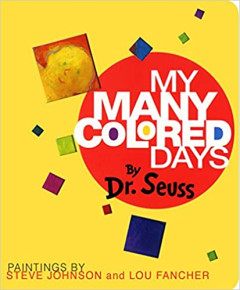
My many colored days
Dr. Seuss's youngest concept book is now available in a sturdy board book for his youngest fans! All of the stunning illustrations and imaginative type designs of Steve Johnson and Lou Fancher are here, as are the intriguing die-cut squares in the cover. A brighter, more playful cover design makes this board book edition all the more appropriate as a color concept book to use with babies or a f…
- Edition
- -
- ISBN/ISSN
- 0099266598
- Collation
- 32 pages : illustration : 26 cm
- Series Title
- -
- Call Number
- 535.6 SEU

Why do sunflowers face the sun? : questions children ask about nature
Provides answers to children's questions about animals, plants, and the world around them.
- Edition
- -
- ISBN/ISSN
- 0751354589
- Collation
- 21 pages : illustration ; 20 cm
- Series Title
- -
- Call Number
- 508 MAR

The seasons
This series deals with a wide variety of subjects, from robots to conservation, castles to volcanoes and religions to money. The texts are short and straightforward. Focusing on the seasons of the year, this book examines its subject from the viewpoints of geography, history, astronomy, biology and anthropology. It first explains why there are seasons and how they differ around the world, and t…
- Edition
- -
- ISBN/ISSN
- 1852100931
- Collation
- 32 pages : illustration : 23 cm
- Series Title
- -
- Call Number
- 508.2 CRA
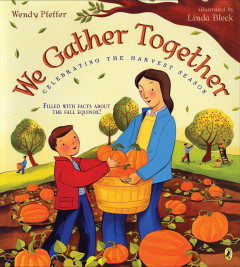
We gather together : celebrating the harvest season
The official start of the harvest season, it occurs around September 21 each year. It marks the end of summer and the beginning of longer nights and shorter days. For many cultures around the world, the fall equinox represents a time to celebrate the harvest and begin collecting and storing crops. Looking at both the science of weather and the history of how the fall equinox has been celeb…
- Edition
- -
- ISBN/ISSN
- 9780147512826
- Collation
- 40 pages : illustration ; 25 cm
- Series Title
- -
- Call Number
- 508.2 PFE
 Computer Science, Information & General Works
  Philosophy & Psychology
  Religion
  Social Sciences
  Language
  Pure Science
  Applied Sciences
  Art & Recreation
  Literature
  History & Geography