Filter by

You wouldn't want to live in a Wild West town! : dust you'd rather not settle
Think again! This delightful series brings something unusual to the study of history: humor. You Wouldn't Want to... revels in the darker side of life in ancient times. The reader is on center stage as he or she gets a tour through life as a slave, warrior, explorer -- even a mummy! Hilarious illustrations, captions, and sidebars leave no doubt that you simply wouldn't want to be there.
- Edition
- -
- ISBN/ISSN
- 0531163679
- Collation
- 32 pages : illustration : 23 cm
- Series Title
- -
- Call Number
- 978 HIC

..If you grew up with George Washington
A portrait of daily life in Colonial America includes discussions of houses, schools, food, clothes, and money.
- Edition
- -
- ISBN/ISSN
- 9780590451550
- Collation
- 64 pages : illustration ; 18 cm
- Series Title
- -
- Call Number
- 973.4 GRO

The Trail of Tears
It is October 1, 1838, and John Ross, the chief of the great Cherokee Nation, is looking at his home for the last time. He and his people are about to begin the long march west. Today is their first day on the Trail of Tears. This captivating true story of the Cherokee Indians, forced to leave their land and travel 1,200 miles to Oklahoma, and their survival against all odds, is set against th…
- Edition
- -
- ISBN/ISSN
- 0439253942
- Collation
- 46 pages : illustration ; 22 cm
- Series Title
- -
- Call Number
- 975 BRU
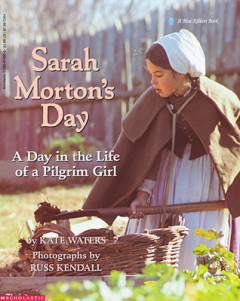
Sarah Morton's day : a day in the life of a Pilgrim girl
Text and photographs of Plimoth Plantation follow a pilgrim girl through a typical day as she milks the goats, cooks and serves meals, learns her letters, and adjusts to her new stepfather.
- Edition
- -
- ISBN/ISSN
- 0590474006
- Collation
- 32 pages : illustration : 25 cm
- Series Title
- -
- Call Number
- 974.4 WAT
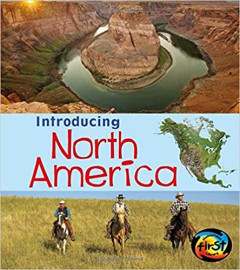
Introducing North America
How many countries are in North America? Where do bald eagles live? What language is spoken in Mexico? This book answers these questions and more as it introduces young readers to the continent of North America through age-appropriate maps, engaging photographs, and simple text. Topics covered within the book include where the continent is, climate, geography, animals and plants, countries, peo…
- Edition
- -
- ISBN/ISSN
- 9781432980436
- Collation
- 32 pages : illustration : 22 cm
- Series Title
- -
- Call Number
- 970 OXL

If you were a pioneer on the prairie
The newest title from this wonderful historical series, "If You Were a Pioneer on the Prairie" gives a child a look at what his or her life would have been like during this time period. This new addition to the popular question-and-answer history series invites readers to step back in time and see what it was like to grow up on the Great Plains more than 100 years ago. What kind of house wo…
- Edition
- -
- ISBN/ISSN
- 9780439414289
- Collation
- 64 pages : illustration ; 18 cm
- Series Title
- -
- Call Number
- 978 KAM
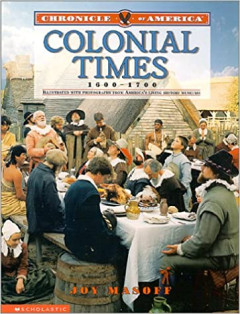
Colonial times, 1600-1700
Enhanced with photos, an "In Their Own Words" section, web site information, activities, and sidebars, shows young readers what it was like to live during this period in American history.
- Edition
- -
- ISBN/ISSN
- 0439051088
- Collation
- 48 pages : illustration ; 27 cm
- Series Title
- Chronicle of America
- Call Number
- 973.2 MAS
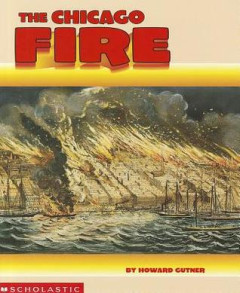
The Chicago fire
By 1865, Chicago had mushroomed from a few log cabins to a thriving community with 600 miles of sidewalks and 50,000 buildings--nearly all made of wood. In 1871, drought conditions and strong winds caused one of many fires to rage out of control.
- Edition
- -
- ISBN/ISSN
- 0439351685
- Collation
- 16 pages : illustration ; 22 cm
- Series Title
- -
- Call Number
- 977.3 GUT
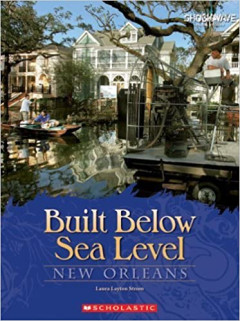
Built below sea level : New Orleans
- Edition
- -
- ISBN/ISSN
- 9780531187746
- Collation
- 32 pages : illustration : 23 cm
- Series Title
- -
- Call Number
- 976.3 STR
- Edition
- -
- ISBN/ISSN
- 9780531187746
- Collation
- 32 pages : illustration : 23 cm
- Series Title
- -
- Call Number
- 976.3 STR
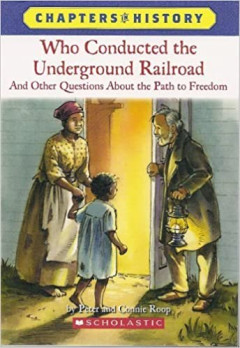
Who conducted the Underground Railroad? : and other questions about the path …
When slaves escaped on the Underground Railroad, they didn't buy tickets. And they didn't even ride on a train! Do you know why it was called the Underground Railroad? And did you know that the Civil War was not fought just to free the slaves? This book will answer all kinds of questions about slavery and the path to freedom!
- Edition
- -
- ISBN/ISSN
- 0439025249
- Collation
- 44 pages : illustration ; 19 cm
- Series Title
- Chapters in History
- Call Number
- 973.3 ROO
 Computer Science, Information & General Works
  Philosophy & Psychology
  Religion
  Social Sciences
  Language
  Pure Science
  Applied Sciences
  Art & Recreation
  Literature
  History & Geography