Filter by
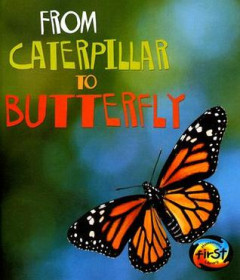
From caterpillar to butterfly
A caterpillar goes through one of the most dramatic transformation in nature. This title explains plant growth in a clear and organized manner. Readers will love watching the transformations take place.
- Edition
- -
- ISBN/ISSN
- 9781403478559
- Collation
- 32 pages : illustration ; 22 cm
- Series Title
- -
- Call Number
- 595.7 GAN

A ladybug's life
Ladybugs are a farmer's best friend-they eat the bugs that would otherwise harm plants. Nature Up close series uses beautiful watercolors to depict each creature's world from its unique perspective. Simple text describes the creatures' movements and activities.
- Edition
- -
- ISBN/ISSN
- 9780516263533
- Collation
- 32 pages : illustration ; 20 cm
- Series Title
- -
- Call Number
- 595.7 HIM
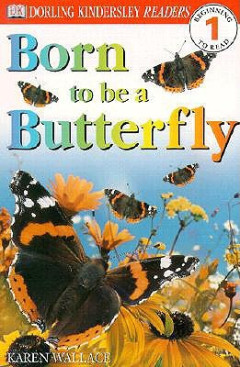
Born to be a butterfly
Combine DK's highly successful Eyewitness approach with engaging and easy-to-read stories and you'll have a series of books guaranteed to capture and delight the imagination of any child. Each level is intended to help develop reading skills and general knowledge to build a lifelong love of reading. Written by leading children's authors and compiled in consultation with literacy experts, these …
- Edition
- -
- ISBN/ISSN
- 9780789457059
- Collation
- 32 pages : illustration ; 22 cm
- Series Title
- DK Readers : Beginning 1 To Read
- Call Number
- 595.7 WAL

From tadpole to frog
Winner of the American Association for the Advancement of Science/Subaru Science Books & Films Prize for Outstanding Science Series A tadpole is a baby frog! Female frogs lay masses of jelly-coated eggs in the water, but what hatches from each egg isn't a frog yet—it's a tadpole. Tadpoles are likely tiny fish that breathe underwater through gills. As the tadpole gets older, it loses its…
- Edition
- -
- ISBN/ISSN
- 0439454654
- Collation
- 32 pages : illustration ; 20 cm
- Series Title
- Lest-read-and-find-out science
- Call Number
- 597.8 PFE
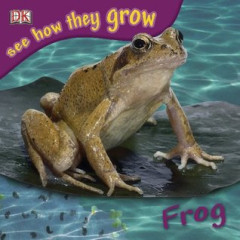
See how the grow : frog
Written in story form, this text shows how an egg grows into a tadpole, and then into a leaping frog. It is part of a series which charts the early stages of an animal's life.
- Edition
- -
- ISBN/ISSN
- 9781428740976
- Collation
- 24 pages : illustration ; 20 cm
- Series Title
- -
- Call Number
- 597.8 ROY

Frogs
How far can frogs jump? Why do their eggs look slimy? Answer these questions and many more in this illustrated introduction to amphibians, and learn about the unique role frogs play in the environment. With her signature bright, well-labeled diagrams and simple text, Gail Gibbons introduces the habitat and life cycles of frogs, and gives a brief overview of common frog behaviors. Important v…
- Edition
- -
- ISBN/ISSN
- 0590506625
- Collation
- 32 pages : illustration ; 20 cm
- Series Title
- -
- Call Number
- 597.8 GIB

An earthworm's life
Discover that earthworms aren't just yucky, but are necessary to keeping soil healthy. Nature Up close series uses beautiful watercolors to depict each creature's world from its unique perspective. Simple text describes the creatures' movements and activities.
- Edition
- -
- ISBN/ISSN
- 0516265350
- Collation
- 32 pages : illustration ; 20 cm
- Series Title
- -
- Call Number
- 592 HIM

The tiny seed
In autumn, a strong wind blows flower seeds high in the air and carries them far across the land. One by one, many of the seeds are lost -- burned by the sun, fallen into the ocean, eaten by a bird. But some survive the long winter and, come spring, sprout into plants, facing new dangers -- trampled by playing children, picked as a gift for a friend. Soon only the tiniest seed remains, growing …
- Edition
- -
- ISBN/ISSN
- 9780140557138
- Collation
- 32 pages : illustration ; 28 cm
- Series Title
- -
- Call Number
- CA
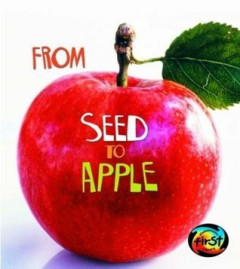
From seed to apple
This series of books looks at the life cycles of familiar animals and plants. Question boxes throughout the text encourage children to make predictions about what is coming up in the text.
- Edition
- -
- ISBN/ISSN
- 9781403478627
- Collation
- 32 pages : illustration ; 22 cm
- Series Title
- How living things grow
- Call Number
- 583 GAN
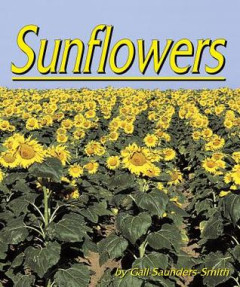
Sunflowers
Text and photographs depict the life cycle of the sunflower, from seeds to sprouts to flowers that finally turn again to seeds.
- Edition
- -
- ISBN/ISSN
- 9781560654896
- Collation
- 24 pages : illustration ; 17 cm
- Series Title
- -
- Call Number
- 583 SAU
 Computer Science, Information & General Works
  Philosophy & Psychology
  Religion
  Social Sciences
  Language
  Pure Science
  Applied Sciences
  Art & Recreation
  Literature
  History & Geography