Filter by
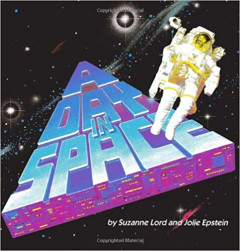
A day in space
Explains the details and activities of space flight from what it is like to walk in space or launch a satellite to eating, sleeping, and brushing your teeth without gravity
- Edition
- -
- ISBN/ISSN
- 0590410997
- Collation
- 32 pages : illustration : 20 cm
- Series Title
- -
- Call Number
- 523.1 LOR

What's so special about planet Earth?
Move to another planet? Sounds interesting! In our imaginary spaceship, let's check out the planets in our solar system. Mercury is closest, but it has no air, and it's either sizzling hot or bitterly cold. The atmosphere on Venus is poisonous; plus, human beings would cook there. Mars might work, but you'd always have to be in a protective shelter. And if you got to the outer planets, you coul…
- Edition
- -
- ISBN/ISSN
- 9780807588161
- Collation
- 32 pages : illustration : 17 cm
- Series Title
- Wells of Knowledge Science Series
- Call Number
- 525 WEL
Do stars have points? : questions and answers about stars and planets
- Edition
- -
- ISBN/ISSN
- 9780439085700
- Collation
- 48 pages : illustration ; 20 cm
- Series Title
- Scholastic question and answer
- Call Number
- 523 BER
- Edition
- -
- ISBN/ISSN
- 9780439085700
- Collation
- 48 pages : illustration ; 20 cm
- Series Title
- Scholastic question and answer
- Call Number
- 523 BER
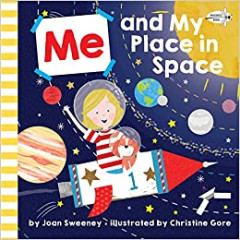
Me and my place in space
Where am I in the solar system? A beloved bestseller, now refreshed with new art from Christine Gore, that will help children discover their place in the Milky Way. Where is the earth? Where is the sun? Where are the stars? Now with new art by Christine Gore, here is an out-of-this world introduction to the universe for children. With Earth as a starting point, a young astronaut leads readers…
- Edition
- -
- ISBN/ISSN
- 9781524773663
- Collation
- 32 pages : illustration : 22 cm
- Series Title
- -
- Call Number
- 523.2 SWE

1000 facts about space
Every page of these stimulating first fact books is crammed with fascinating facts that are vividly presented and accompanied by dozens of colorful illustrations. With additional fact lists and an index, children are sure to find these books both appealing and accessible.
- Edition
- -
- ISBN/ISSN
- 9780590486811
- Collation
- 47 pages : illustration ; 27 cm
- Series Title
- -
- Call Number
- 520 BEA
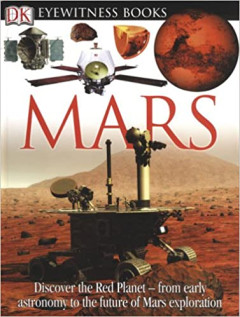
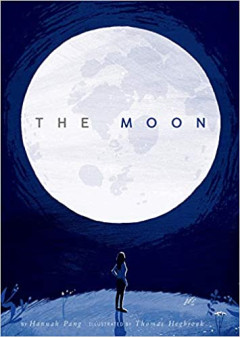
The moon
For centuries, humankind has gazed up at the Moon in awe and wonder. It has been a source of inspiration to artists, astronomers, poets, and mathematicians alike. But how much do we really know about our closest neighbor? Explore the history of man’s relationship with the Moon—the science, the myths, the facts, and the fiction—and how it affects our everyday lives and the world around us.
- Edition
- -
- ISBN/ISSN
- 9781848577381
- Collation
- 175 pages : illustration ; 26 cm
- Series Title
- -
- Call Number
- 523.3083 PAN

The universe : origins and evolution
Discusses the origins, development, and future of the universe, and traces ancient ideas on the subject, the "Big Bang" theory, the development of the four forces--gravity, the strong and weak nuclear forces, and electromagnetic radiation--galaxies, and other topics.
- Edition
- -
- ISBN/ISSN
- 9781855613775
- Collation
- 45 pages : illustration ; 30 cm
- Series Title
- Beginnings
- Call Number
- 523.1 MIO

 Computer Science, Information & General Works
  Philosophy & Psychology
  Religion
  Social Sciences
  Language
  Pure Science
  Applied Sciences
  Art & Recreation
  Literature
  History & Geography