Filter by

Weather
This exciting series presents a practical look at how nature works -- young readers are taken on a hands-on exploration of their environment. Step-by-step experiments help the reader to observe and to learn. This description may be from another edition of this product.
- Edition
- -
- ISBN/ISSN
- 9780749633233
- Collation
- 30 pages : illustration ; 24 cm
- Series Title
- It's science
- Call Number
- 551.6 HEW

Weather
Early in the 17th century, Francis Bacon decided that the best way to learn about the world was to discover things for oneself. Since then, science has been a marriage of observation and experimentation. The experiments contained in each chapter allow young scientists to investigate basic principles using common household materials and easy-to-follow instructions. The titles are filled with doz…
- Edition
- -
- ISBN/ISSN
- 9780761410898
- Collation
- 32 pages : illustration : 26 cm
- Series Title
- Science Experiments
- Call Number
- 551.6 FAR

Scholastic atlas of weather
The Scholastic Atlas of Weather gives kids weather information, activities, trivia, and more. Stunning illustrations bring weather phenomena to life. Every spread in the Scholastic Atlas of Weather contains a huge, dynamic, and colorful illustration, which shows kids exactly what causes weather to run wild. Clear, succinct captions underscore the vital scientific information kids need to ful…
- Edition
- -
- ISBN/ISSN
- 9780439678650
- Collation
- 80 pages : illustration ; 26 cm
- Series Title
- -
- Call Number
- 551.6 SCH

Deserts
What's the difference between a lizard and a salamander? Can you guess why poison dart frogs are so colorful? What's so funny about a clown fish? And what in the world is an anemone? REPTILES AND AMPHIBIANS and OCEAN LIFE are the newest titles in the Blue Zoo Guides series. Close-up photos, charming illustrations, and a clever ruler for measuring the animals will make these big books a sure-fir…
- Edition
- -
- ISBN/ISSN
- 042799004241
- Collation
- 44 pages : illustration ; 30 cm
- Series Title
- Discover
- Call Number
- 551.41 VOG
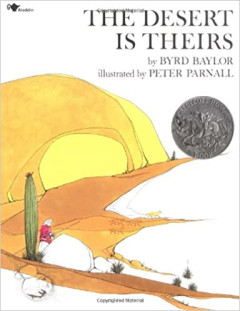
The desert is theirs
You may think of the desert as a harsh, dry place where no one would ever want to live -- but think again. The Desert People know. so do the animals. Both love the land, and "share the feeling of being brothers in the desert, of being desert creatures together." Byrd Baylor's spare, poetic text and Peter Parnall's striking illustrations lime the sky, stone and sand of the desert in this haunt…
- Edition
- -
- ISBN/ISSN
- 9780689711053
- Collation
- 32 pages : illustration : 25 cm
- Series Title
- -
- Call Number
- 551.41 BAY

How do islands form?
There are hundreds of islands on Earth, from the isle of Manhattan to the island chain of the Philippines. Some of these island are close to shore, while others are thousands of miles from other land. However, these islands did not appear overnight. It often took thousands or millions of years for them to form. How Do Islands Form? uncovers the science of island formation, showing the science o…
- Edition
- -
- ISBN/ISSN
- 9781604134742
- Collation
- 32 pages : illustration : 24 cm
- Series Title
- Science in the Real World
- Call Number
- 551.4 WIL
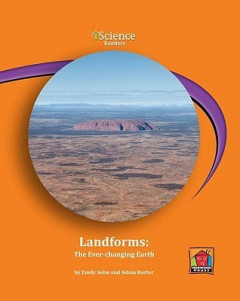
Landforms : the ever-changing earth
"Describes the forces that shape the Earth's surface, and how and why they occur. As readers use scientific inquiry to learn the different explanations for what causes landscapes to change, an activity based on real world situations challenges them to apply what they've learned in order to solve a puzzle"--Provided by publisher.
- Edition
- -
- ISBN/ISSN
- 9781599534251
- Collation
- 48 pages : illustration ; 22 cm
- Series Title
- Science Readers
- Call Number
- 551.41 SOH


Islands
Through stunning photographs and simple text, the books in this series introduce landforms and their characteristics. In this book, children learn about the features of islands, where islands are found, and what makes islands unique.
- Edition
- -
- ISBN/ISSN
- 9781403484437
- Collation
- 24 pages : illustration ; 17 cm
- Series Title
- Landforms
- Call Number
- 551.4 MAY

Mountains : geology, natural history, & ecosystems
This top-selling series introduces the wild creatures of the world and examines the natural world. Good general introductions for ages 10+, these volumes contain the knowledge, personal experiences, and research of leading naturalists and scientists, accompanied by stunning photography. Unless otherwise noted (*), all volumes are sturdy paperback.
- Edition
- -
- ISBN/ISSN
- 9780896582514
- Collation
- 72 pages : illustration ; 22 cm
- Series Title
- -
- Call Number
- 551.43
 Computer Science, Information & General Works
  Philosophy & Psychology
  Religion
  Social Sciences
  Language
  Pure Science
  Applied Sciences
  Art & Recreation
  Literature
  History & Geography