Filter by
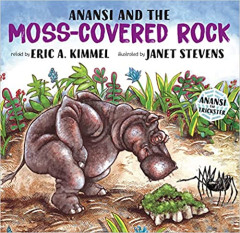
Anansi and the moss-covered rock
When Anansi the Spider finds a strange moss-covered rock in the forest, he uses it to trick all his animal friends. But Little Bush Deer is onto Anansi's scheme, and hatches a plan to beat him at his own game. Based on tales originating in West Africa and familiar in Caribbean culture, the five-book Anansi the Trickster series is full of slapstick humor and mischief. Eric A. Kimmel’s imagi…
- Edition
- -
- ISBN/ISSN
- 9780823407989
- Collation
- 32 pages : illustration : 24 cm
- Series Title
- -
- Call Number
- 398.24 KIM

The very busy spider
- Edition
- -
- ISBN/ISSN
- 0399215921
- Collation
- -
- Series Title
- -
- Call Number
- C
- Edition
- -
- ISBN/ISSN
- 0399215921
- Collation
- -
- Series Title
- -
- Call Number
- C
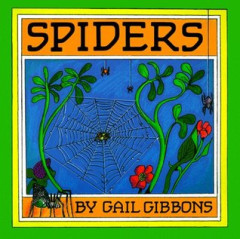
Spiders
From tiny baby spiderlings to large tarantulas, nonfiction master Gail Gibbons' introduction to these intriguing arachnids reminds us that even when they look scary, most spiders are harmless--and even helpful! There are over thirty thousand kinds of spiders in the world--small and large, colorful or gray--and they live, hunt, and adapt in different ways. A number of different species and sp…
- Edition
- -
- ISBN/ISSN
- 9780823410811
- Collation
- 32 pages : illustration ; 20 cm
- Series Title
- -
- Call Number
- 595.4 GIB
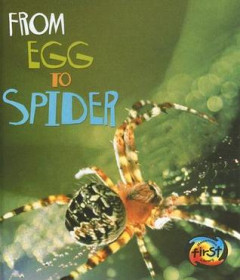
From egg to spider
Discover how an egg grows into a spider. This title explains animal growth in a clear and organized manner. Readers will love watching the transformations take place.
- Edition
- -
- ISBN/ISSN
- 9781403478603
- Collation
- 32 pages : illustration ; 22 cm
- Series Title
- How living things grow
- Call Number
- 595.4 GAN

Are you a spider?
Did you know that when a spider's web is damaged, a spider will often eat the remaining silk before making a new one? Young children will make many amazing discoveries about spiders in the captivating Backyard Books: Are You a Spider? by Judy Allen with illustrations by Tudor Humphries.
- Edition
- -
- ISBN/ISSN
- 9780753406694
- Collation
- 31 pages : illustration ; 20 cm
- Series Title
- Up the garden path
- Call Number
- 595.4 ALL
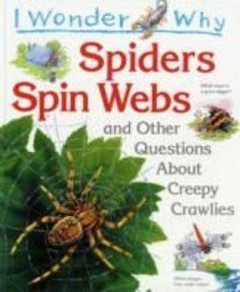
I wonder why spiders spin webs : and other questions about creepy crawlies
Book Summary of I Wonder Why Spiders Spin Webs And Other Questions About Creepy Crawlies Colour artwork and cartoons illustrate another title from the question and answer series I WONDER WHY, with unusual facts and information about all sorts of creepy crawlies from spiders to scorpions. Suitable for National Curriculum Science Key Stage 1/2.
- Edition
- -
- ISBN/ISSN
- 9780753405154
- Collation
- 32 pages : illustration ; 28 cm
- Series Title
- -
- Call Number
- 595.7 ONE

The bugliest bug
All of insect land is abuzz with news of a big contest! The demure Damselfly Dilly - "neither clever nor frilly" - has no thoughts of winning, but she’s curious to find out who will. And what she sees makes her eyes bug out! Glowworms light up the stage, the audience hums with anticipation, and a panel of judges grins . . . but wait, aren’t those fangs she sees glinting? The wild and wit…
- Edition
- -
- ISBN/ISSN
- 0439437873
- Collation
- 32 pages : illustration ; 22 cm
- Series Title
- -
- Call Number
- 595.7 SHI

Spiders
This non-fiction series aims to encourage children to access the wonder of the world around them. The books have two reading levels, with a simple sentence on each page for beginners, and more complex information for more confident readers. In this text illustrations show a spider building a web.
- Edition
- -
- ISBN/ISSN
- 9780545032742
- Collation
- 32 pages : illustration ; 20 cm
- Series Title
- -
- Call Number
- 595.4 GIL

Spiders
For the first to third grade set, spiders are fascinating and suitably gruesome, especially when looked at in EXTREME close-up. Amazing images show the beauty and otherworldliness of spiders. Simple, engaging text conveys basic information about spiders as well as cool and quirky facts. One stop-action montage shows a spider leaping twenty times its body length!
- Edition
- -
- ISBN/ISSN
- 9780545057363
- Collation
- 48 pages : illustration ; 27 cm
- Series Title
- -
- Call Number
- 595.4 BIS

Do all spiders spin webs? : questions and answers about spiders
How many kinds of spider webs are there? What makes spider silk so strong? How do small spiders eat bigger frogs and birds? Which spider uses a lasso to catch its prey? How do spiders see at night to hunt? Do all spiders have fangs? These, and more questions and their answers, introduce kids to the intricate and fascinating world of spiders.
- Edition
- -
- ISBN/ISSN
- 9780439148818
- Collation
- 48 pages : illustration ; 20 cm
- Series Title
- Scholastic question & answer series
- Call Number
- 595.4 SIM
 Computer Science, Information & General Works
  Philosophy & Psychology
  Religion
  Social Sciences
  Language
  Pure Science
  Applied Sciences
  Art & Recreation
  Literature
  History & Geography